
#OpEd: Can AI-Driven Influencer Marketing Erode Brand Trust Faster Than Humans Can Build It?
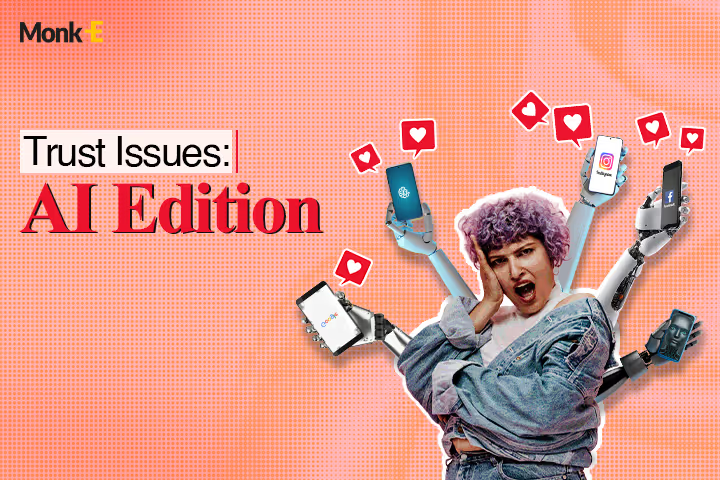


The next time you pause mid-scroll on an influencer video that feels too perfect, check twice - it might not be real.
The lighting’s immaculate. The voice never falters. The smile lands right on beat. And yet, you can’t shake the feeling that something’s missing.
That something is human imperfection, the quiet pulse of realness that makes audiences connect and brands credible.
In 2025, influencer marketing has reached an uncanny stage - where machines can mimic authenticity better than humans can perform it.
And that’s exactly what makes it dangerous for brand trust.
Why Brands Are Hooked on Perfection
Let’s be honest - AI influencers make marketers drool. They don’t get tired, controversial, or expensive. They deliver flawless output, on time, every time.
For brands, that’s seductive. Why negotiate schedules, moods, or revisions when you can just program them?
That’s why we’re seeing a quiet but steady adoption of AI-led creator campaigns:
- Kyra, India’s first virtual influencer by FUTR Studios, worked with certain big brands.
- Globally, Lil Miquela and Imma are racking up luxury endorsements with the reliability of a content machine.
AI promises consistency but in branding, consistency isn’t the same as connection. The danger isn’t that these avatars exist. The danger is when brands start believing efficiency = trust.
Trust: The Currency Brands Can’t Automate
Every ad, post, or collaboration - ultimately trades on one thing: trust. You trust that the influencer actually likes what they’re selling. You trust that the brand means what it says.
When AI steps in, that invisible currency starts to fray.
Think about it: Trust isn’t built in pixels or precision. It’s built in pause - the hesitation, the laugh, the unscripted chaos. The moment a creator stumbles and corrects themselves, you feel like they’re real.
Machines don’t stumble. And that’s the problem.
In influencer marketing, over-polish often reads as over-sell. AI strips away the very friction that signals “I’m not performing, I’m just being.”
A Northeastern University study in 2025 confirmed this: there is likely to be more reputational damage done to a brand’s trust if artificial intelligence-powered influencers, rather than their human equivalents, are involved in selling a product that a consumer is unhappy with.
Because trust isn’t information; it’s intimacy built over time.
What’s Really at Stake for Brands
If influence was once about reach, today it’s about relatability and recall. And recall only works if the emotion behind it feels true.
Brands that go all-in on AI-driven influence risk three long-term problems:
- Loss of emotional credibility- People may remember the ad but forget the brand, because there’s no emotional anchor.
- Erosion of social proof- AI-generated reviews or endorsements blur what’s authentic; soon every testimonial feels synthetic.
- Diminished brand intimacy- When creators become characters, brands lose their human front the person audiences could identify with.
In short: AI can sell a product, but it can’t build a promise.
What Agencies Must Understand and Protect
For influencer agencies, this isn’t about panic. It’s about redefining value. Their real job now? Becoming the custodians of trust.
Agencies that survive won’t be the ones offering the biggest rosters or lowest commissions but the ones that ensure credibility is never compromised, no matter how futuristic the campaign.
They’ll need to:
- Build AI-disclosure norms for clients (“synthetic voice used,” “AI-rendered model,” etc.)
- Offer trust audits as part of campaigns - verifying engagement authenticity
- Develop ethical hybrid models, where creators collaborate with AI versions of themselves transparently
- Craft emotional storytelling frameworks that AI tools can’t mimic grounded in culture, humour, vulnerability
Because when every brand starts using AI, it’s how human your brand feels that will set it apart.
The Indian Lens: Why Trust Hits Harder Here
India’s influencer economy runs not on followers, but on familiarity. Our creators are not just “content machines” - they’re people audiences grow with.
When a Dolly Singh shares a personal anecdote, or an Aastha Shah talks about confidence, audiences don’t see a “campaign.” They see a human reflection.
That emotional glue, humour, honesty, cultural connection, is hard-coded into the Indian viewer’s psyche. Replace it with algorithmic avatars, and you’ll lose more than engagement. You’ll lose believability.
The Future of Influence: The Age of Verified Humanity
The next wave won’t be human vs. AI - it’ll be trust-based vs. transaction-based influence.
We’ll see authenticity labels on content; Brand loyalty scored by perceived honesty not just ROI metrics; Hybrid influencer strategies - where AI handles scalability, and humans handle sincerity
And agencies that sit in the middle - as architects of trust + tech - will define the future.
Because soon, “real” will be the most expensive asset on the internet.
AI may boost performance, but it risks breaking the one invisible thing every brand needs to survive - belief.
Machines can sell faster. But only humans can make us care.
And in a world obsessed with reach, care is the metric that still converts.
Read More Articles
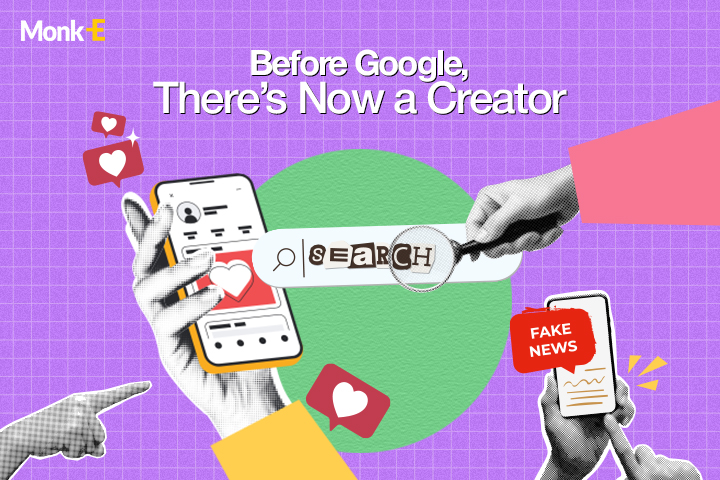
When Creators Became Search Engines
A few years ago, if you wanted to know the best ramen spot in Delhi, you’d Google it.
Today, you type it into Instagram. Or YouTube. Or sometimes you don’t even type. You just trust that a creator you follow has already done the homework for you.
Somewhere between reels, vlogs and “things you must try before you die” lists, creators have quietly stepped into a role search engines once dominated: answers.
Search, But With Personality
Traditional search gives you links. Creators give you context.
Instead of scrolling through ten articles about the “best cafes in Bandra,” you watch one creator walk into the place, order the coffee, complain about the seating and rate the croissant.
Suddenly the information feels…usable.
This is why queries that once lived on Google now live on social feeds:
-Best cafes in Bangalore
-Budget travel hacks
-Skincare routines for Indian skin
-Laptop recommendations for students
People want answers, yes. But increasingly, they want answers from someone they recognise.
The Trust Shortcut
Creators work as search engines for one simple reason: trust. Google may give you 50 results for “best protein powder.” A fitness creator you follow gives you three options and a brutally honest take on which one tastes like chalk.
It’s not always objective. But it feels real.
And for audiences navigating everything from skincare ingredients to travel planning, that sense of lived experience matters more than algorithmic ranking.
Discovery Is Moving to Social
This shift has quietly changed how brands think about discovery. Products are no longer found only through ads or search pages. They’re discovered through:
-a creator’s “things I bought this month” video
-a cafe recommendation reel
-a tech review shot in someone’s bedroom
The search journey now often begins with a person, not a platform. Which is why brands increasingly care about being present in creator conversations - not just search results.
The Human Search Result
Of course, creators don’t replace search engines entirely. But they do something search engines can’t: they filter the internet through human experience.
A travel creator doesn’t just tell you where to go. They tell you whether the crowd is unbearable, whether the food is overrated and whether the place is actually worth the hype.
That’s not just information. That’s judgement.
And in the endless chaos of the internet, sometimes the most valuable thing isn’t more results. It’s someone saying, “Don’t bother. This one’s better.”
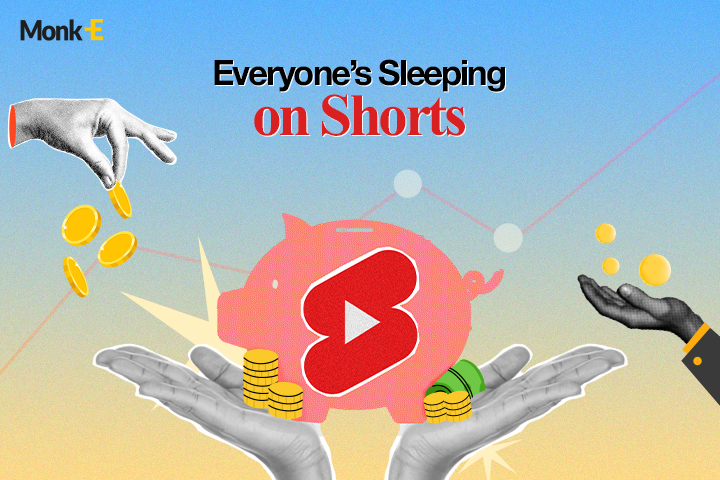
The Creator Economy’s Most Underrated Platform: YouTube Shorts
There’s a certain predictability to creator economy conversations in India.
Instagram comes up first. Always.
Then maybe a passing mention of long-form YouTube. And somewhere in between, brand folks talk about reels, reach, and what’s “working right now.”
YouTube Shorts rarely enters that conversation with the same urgency.
Which is strange, because if you look closely, it’s doing a lot more than people give it credit for.
Shorts doesn’t behave like Instagram. That’s probably why it’s misunderstood. On Instagram, content lives and dies by momentum - the first few minutes, the early engagement, the algorithm deciding whether you’re worth pushing further.
Shorts feels…slower. But also steadier.
A video doesn’t necessarily peak and disappear. It keeps floating. It resurfaces. Sometimes days later. Sometimes weeks. Creators who’ve spent enough time on the platform will tell you this: a video you forgot about can suddenly pick up traction out of nowhere.
That doesn’t happen as often elsewhere.
There’s also the audience itself. Shorts reaches a version of India that Instagram doesn't fully touch - smaller cities, different language preferences, users who aren’t necessarily following creators but are constantly consuming them.
Which means discovery works differently here.
On Instagram, you often grow through followers. On Shorts, you grow through distribution.
The platform doesn’t always care if someone knows you. It cares if your content is worth showing again. That’s a big shift.
For brands, this creates an odd gap.
On one hand, Shorts offers massive reach, strong repeat visibility, and a user base that is still expanding in meaningful ways. On the other, it doesn’t have the same cultural signalling as Instagram yet.
A reel feels like a moment.
A Shorts video feels like…content.
So naturally, budgets lean toward what feels visible. But that gap is also where the opportunity sits. Because while everyone competes for attention on one platform, another one quietly becomes less crowded, more forgiving, and in many ways, more scalable.
Creators, of course, have already figured this out.
Many of them aren’t choosing between platforms anymore. They’re repurposing, adapting, and in some cases, building entirely separate audiences on Shorts. It’s not unusual to see someone with modest Instagram numbers pull significantly higher views on YouTube Shorts.
Different algorithm. Different audience behaviour. Different outcome.
The interesting part isn’t that Shorts is growing. It’s that it’s growing without demanding attention. No loud narrative. No “this is the next big thing” moment.
Just consistent distribution, wide reach, and a platform that keeps showing content to people who didn’t know they were looking for it.
And maybe that’s why it’s underrated.
Not because it’s small.
But because it doesn’t try too hard to prove that it isn’t.