
How Monk Entertainment Turned a Viral Lay’s Complaint Into a Full-Blown Internet Moment


Most viral creator moments disappear within a week. The internet reacts, brands jump in late, audiences move on. But every once in a while, a brand catches the moment at exactly the right time.
Back in 2023, a video by creator Zervaan complaining about Lay’s changing the flavour of Magic Masala started blowing up online. The reaction was dramatic, funny and weirdly emotional - exactly the kind of thing the internet loves turning into a collective movement.
The video crossed millions of views, shares started piling up, and suddenly a chips flavour had become discourse.
What made the moment interesting wasn’t just the virality. It was what happened after.
A creator complaint became a brand storyline
Instead of letting the trend fade out, Monk Entertainment helped stretch the moment into something much bigger.
First, Bingo jumped into the conversation by sending Zervaan a truck full of their chips, cashing in on the viral momentum almost instantly. But despite the internet chaos, the creator still wanted the old Lay’s flavour back.
That opened up a very unusual chain of events.
Monk Entertainment worked closely with the Lay’s team to turn the internet reaction into an actual creator-led campaign. The old flavour was brought back, Zervaan became part of the announcement, and the campaign slowly evolved from a viral complaint into a collaborative storyline audiences were already emotionally invested in.
The smartest part? They didn’t let the momentum die while the product relaunch was being worked on.
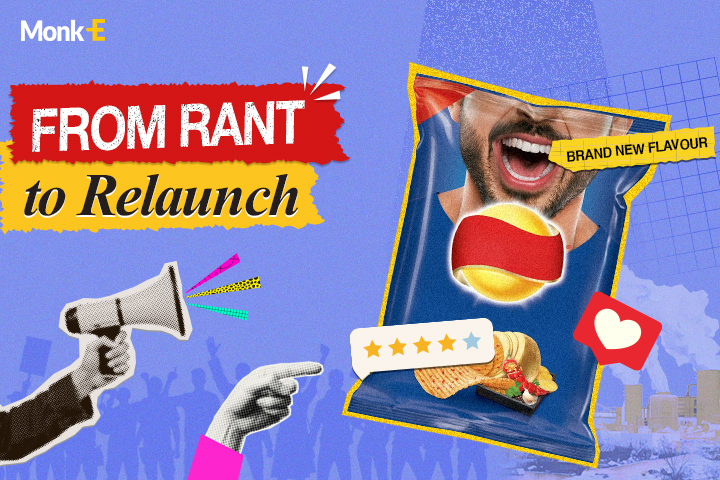
Instead, Zervaan was sent to the factory to “check” whether the old flavour was actually coming back. The content kept moving. The audience stayed hooked. And by the time the relaunch happened, people already felt part of the journey. Eventually, the creator’s face even made it to the Lay’s packaging.
Not bad for a rant video.
The internet moves fast but this campaign moved faster
What stands out about this campaign even today is how instinctive it felt.
No overproduced brand messaging.
No trying to manufacture relevance.
Just creators, brands and teams reacting to internet culture in real time and honestly, that’s what a lot of creator marketing still struggles with. Most campaigns are planned too far in advance to behave naturally online. By the time approvals happen, the moment is already gone.
This one moved at internet speed.
The bigger shift behind moments like these
Campaigns like this also say something bigger about creator marketing today. Creators are no longer just distribution channels for brands. Sometimes, they become the starting point of the entire campaign itself.
The audience reaction shapes the brief.
The internet shapes the narrative.
The creator becomes part of the product story and when that loop works well, it stops feeling like marketing and starts feeling like culture unfolding in real time.
Why this campaign still feels relevant
Even two years later, the Lay’s Magic Masala moment still gets referenced because it captured something brands are still chasing - relevance that doesn’t feel forced. Not every viral video can become a campaign and not every brand can react quickly enough to make it work.
But when the timing, creator instinct and execution align, the internet does a lot of the heavy lifting on its own.
And in this case, Monk Entertainment managed to keep that momentum alive long enough to turn a complaint into one of the more memorable creator-led brand moments India has seen in recent years.
Read More Articles
When Creators Became Search Engines
A few years ago, if you wanted to know the best ramen spot in Delhi, you’d Google it.
Today, you type it into Instagram. Or YouTube. Or sometimes you don’t even type. You just trust that a creator you follow has already done the homework for you.
Somewhere between reels, vlogs and “things you must try before you die” lists, creators have quietly stepped into a role search engines once dominated: answers.
Search, But With Personality
Traditional search gives you links. Creators give you context.
Instead of scrolling through ten articles about the “best cafes in Bandra,” you watch one creator walk into the place, order the coffee, complain about the seating and rate the croissant.
Suddenly the information feels…usable.
This is why queries that once lived on Google now live on social feeds:
-Best cafes in Bangalore
-Budget travel hacks
-Skincare routines for Indian skin
-Laptop recommendations for students
People want answers, yes. But increasingly, they want answers from someone they recognise.
The Trust Shortcut
Creators work as search engines for one simple reason: trust. Google may give you 50 results for “best protein powder.” A fitness creator you follow gives you three options and a brutally honest take on which one tastes like chalk.
It’s not always objective. But it feels real.
And for audiences navigating everything from skincare ingredients to travel planning, that sense of lived experience matters more than algorithmic ranking.
Discovery Is Moving to Social
This shift has quietly changed how brands think about discovery. Products are no longer found only through ads or search pages. They’re discovered through:
-a creator’s “things I bought this month” video
-a cafe recommendation reel
-a tech review shot in someone’s bedroom
The search journey now often begins with a person, not a platform. Which is why brands increasingly care about being present in creator conversations - not just search results.
The Human Search Result
Of course, creators don’t replace search engines entirely. But they do something search engines can’t: they filter the internet through human experience.
A travel creator doesn’t just tell you where to go. They tell you whether the crowd is unbearable, whether the food is overrated and whether the place is actually worth the hype.
That’s not just information. That’s judgement.
And in the endless chaos of the internet, sometimes the most valuable thing isn’t more results. It’s someone saying, “Don’t bother. This one’s better.”
The Creator Economy’s Most Underrated Platform: YouTube Shorts
There’s a certain predictability to creator economy conversations in India.
Instagram comes up first. Always.
Then maybe a passing mention of long-form YouTube. And somewhere in between, brand folks talk about reels, reach, and what’s “working right now.”
YouTube Shorts rarely enters that conversation with the same urgency.
Which is strange, because if you look closely, it’s doing a lot more than people give it credit for.
Shorts doesn’t behave like Instagram. That’s probably why it’s misunderstood. On Instagram, content lives and dies by momentum - the first few minutes, the early engagement, the algorithm deciding whether you’re worth pushing further.
Shorts feels…slower. But also steadier.
A video doesn’t necessarily peak and disappear. It keeps floating. It resurfaces. Sometimes days later. Sometimes weeks. Creators who’ve spent enough time on the platform will tell you this: a video you forgot about can suddenly pick up traction out of nowhere.
That doesn’t happen as often elsewhere.
There’s also the audience itself. Shorts reaches a version of India that Instagram doesn't fully touch - smaller cities, different language preferences, users who aren’t necessarily following creators but are constantly consuming them.
Which means discovery works differently here.
On Instagram, you often grow through followers. On Shorts, you grow through distribution.
The platform doesn’t always care if someone knows you. It cares if your content is worth showing again. That’s a big shift.
For brands, this creates an odd gap.
On one hand, Shorts offers massive reach, strong repeat visibility, and a user base that is still expanding in meaningful ways. On the other, it doesn’t have the same cultural signalling as Instagram yet.
A reel feels like a moment.
A Shorts video feels like…content.
So naturally, budgets lean toward what feels visible. But that gap is also where the opportunity sits. Because while everyone competes for attention on one platform, another one quietly becomes less crowded, more forgiving, and in many ways, more scalable.
Creators, of course, have already figured this out.
Many of them aren’t choosing between platforms anymore. They’re repurposing, adapting, and in some cases, building entirely separate audiences on Shorts. It’s not unusual to see someone with modest Instagram numbers pull significantly higher views on YouTube Shorts.
Different algorithm. Different audience behaviour. Different outcome.
The interesting part isn’t that Shorts is growing. It’s that it’s growing without demanding attention. No loud narrative. No “this is the next big thing” moment.
Just consistent distribution, wide reach, and a platform that keeps showing content to people who didn’t know they were looking for it.
And maybe that’s why it’s underrated.
Not because it’s small.
But because it doesn’t try too hard to prove that it isn’t.